

Thermal imaging technology is no longer just for heavy industry or specialized professionals. Whether you are a homeowner trying to trace a stubborn leak, an electronics enthusiast debugging a circuit board, or simply a pet owner looking for your cat in the dark, thermal cameras have become essential everyday tools.
Today, we are diving deep into the practical uses of our ultra-portable X7 Thermal Imager and comparing it with the Hikmicro K09 to help you decide which tool best fits your needs.
Top Everyday Application Scenarios for the X7
Despite weighing only 81 grams and fitting easily in the palm of your hand, the X7 is a powerhouse for diagnosing invisible problems. Here is how you can use it:
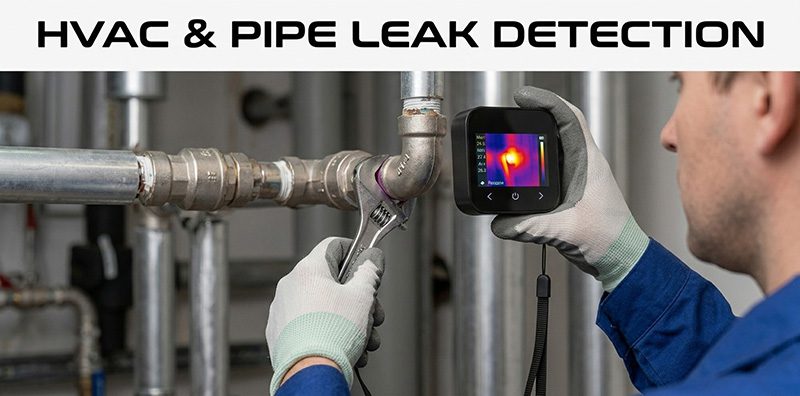
Home Diagnostics (Underfloor Heating & Water Pipe Leaks): Water damage can be incredibly costly. The X7 allows you to see temperature variations behind walls or under floors, helping you pinpoint hidden water leaks or blockages in underfloor heating systems before they require major demolition.
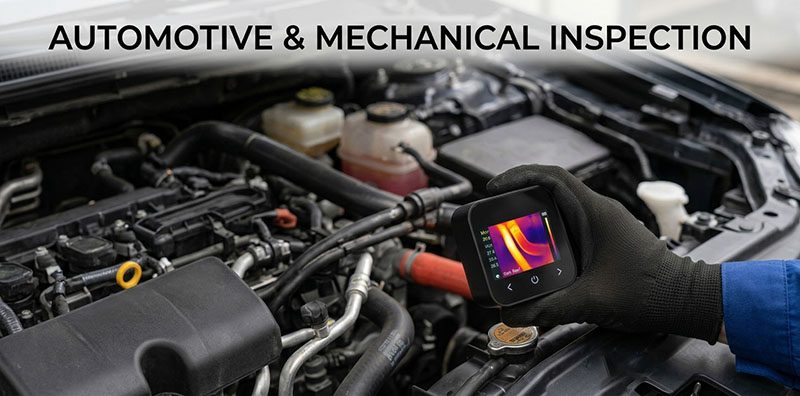
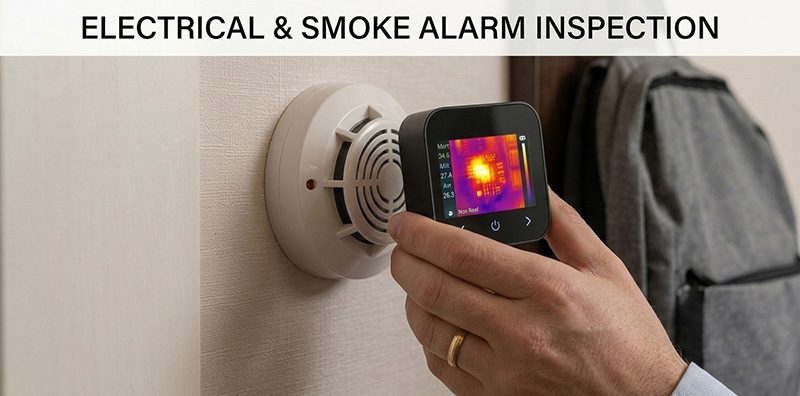
Electrical & Mechanical Inspection: Loose connections and overloaded circuits generate heat before they fail. By scanning your electrical panels or mechanical engine parts with the X7, you can identify overheating components and prevent potential fire hazards or costly machinery breakdowns.
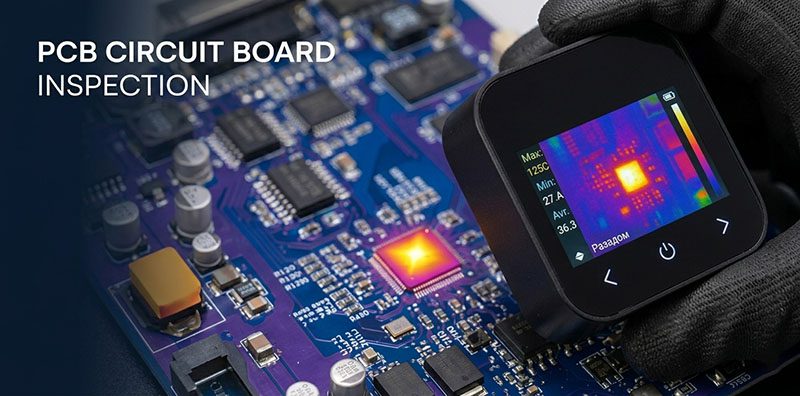
PCB Circuit Board Detection: For tech repair specialists and DIY electronics hobbyists, the X7 is invaluable. It quickly highlights short circuits and overheating microchips on a PCB, saving hours of manual multimeter testing.
Pet Finding: As shown by the clear thermal silhouette on our device’s screen, the X7 is perfect for spotting pets in the dark or finding out where they are hiding around the yard at night.
Privacy Protection: Traveling? Hidden spy cameras emit a faint heat signature while operating. A quick sweep of your hotel room or Airbnb with the X7 can help you spot hidden electronics, ensuring your privacy remains intact.
This image shows the left scene (baby bottle) and the right scene (barbecue grill) are separated:
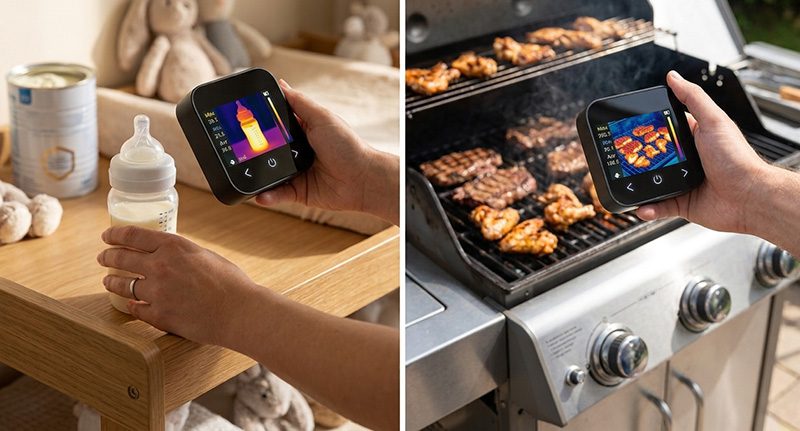
Baby Bottle Temperature Measurement: The thermal imager can detect the temperature of a baby bottle, and the data on the screen reflects temperatures relevant to the milk bottle (e.g., Max 38.5°C, Min 25.0°C, Avr 36.8°C).
Barbecue Temperature Measurement: The thermal imager can measure the temperature of the barbecue grill ribs and chicken wings, with bright white/yellow hot spots on the meat and a distinct pattern corresponding to the grilling food. The screen data shows high temperatures (e.g., Max 185.3°C, Min 75.1°C, Avr 160.0°C).
Product Comparison: X7 vs. Hikmicro K09
If you are in the market for a thermal imager, you might be wondering how the X7 stacks up against a heavier device like the Hikmicro K09. While both feature excellent 96*96 thermal resolution and the same temperature measurement accuracy, they are built for entirely different users.
Here is a quick breakdown to help you choose:
| Feature | X7 Thermal Imager (Our Pick for Portability) | Hikmicro K09 (The Heavier Alternative) |
| Size & Portability | Extremely Compact: 61*61*14 mm | Bulky: 127* 84*24 mm |
| Weight | Ultra-lightweight: 81g | Heavy: 218g |
| Display | 2.0-inch TFT Display | 3.5-inch LCD Touch Screen |
| Best For | Everyday Carry (EDC), Homeowners, Quick Inspections, Pet Finding | Long-duration professional analysis, Scientific experiments |
| Extra Features | Focused on pure thermal imaging, zero learning curve | Includes visible light, photo/video recording, 4GB storage |
| Battery Life | 2 Hours (perfect for quick, on-the-spot sweeps) | 4 Hours |
Which one should you buy?
If you need a device for intensive, multi-hour scientific experimental analysis with video recording capabilities, the heavier K09 is a solid choice.
However, if you want a true pocket-sized tool that you can carry anywhere without feeling weighed down, and the price is more cost-effective, the X7 is the clear winner. Its minimalist, user-friendly design gives you instant thermal insights for home repairs, circuit checks, and everyday security without the bulk or complex menus of larger industrial units.